How Do Uterine Fibroids Affect Fertility?

Uterine fibroids are a common condition that affects women, with symptoms varying widely from person to person. Some women with fibroids may experience noticeable discomfort or heavy periods, while others do not notice symptoms at all. Although many fibroids can remain undetected and asymptomatic, certain types may affect the uterus and affect one's fertility, reducing the chance of a successful pregnancy.
Understanding how fibroids affect fertility can help you recognise when they may be causing difficulties with conception, and guide you on when it may be appropriate to seek medical advice.
What Are Uterine Fibroids?
Uterine fibroids are non-cancerous growths that develop in or around the uterus. They are made up of muscle and fibrous tissue, and can vary in size from very small, seed-like nodules to larger masses. Fibroids may occur as a single growth or in clusters, and if large enough, may begin changing the shape of the surrounding tissue.
Many women with fibroids do not experience any symptoms and may only discover them during a routine pelvic examination or imaging scan. However, some fibroids can cause heavy menstrual bleeding, pelvic pain or a feeling of pressure on the bladder or bowel. In certain cases, they may also affect fertility.
Which Fibroids Are More Likely to Affect Fertility
Not all fibroids have the same impact on fertility. Whether they affect your ability to get pregnant largely depends on their size and, more importantly, their location within the uterus.
- Submucosal fibroids: Submucosal fibroids grow into the inner cavity of the uterus and are the most likely to affect fertility. They can disrupt the lining of the womb and make it more difficult for an embryo to implant successfully.
- Intramural fibroids: Intramural fibroids develop within the muscular wall of the uterus. Larger fibroids can change the shape or function of the womb, which may reduce the chances of conception.
- Subserosal fibroids: Subserosal fibroids grow on the outer surface of the uterus and usually do not affect fertility directly. However, if they become very large, they may press on nearby structures and indirectly affect reproductive function.
How Uterine Fibroids Can Interfere With Conception
There are several common ways that uterine fibroids can physically interfere with conception:
Blocking or Distorting the Fallopian Tubes
Fibroids located near the fallopian tubes can compress or distort them, making it more difficult for the egg to travel from the ovary to the uterus. This can reduce the chances of the egg and sperm meeting.
Making It Harder for Sperm to Reach the Egg
Changes in the shape of the uterus or cervix caused by fibroids can affect how sperm move through the reproductive tract. In some cases, fibroids may alter normal uterine contractions, which help guide sperm towards the fallopian tubes.
Changing the Shape of the Womb
Fibroids that grow within or push into the uterus can distort its normal shape. This can make it harder for a fertilised egg to find a suitable place to implant.
Making the Womb Less Ready for Pregnancy
A healthy, well-prepared lining is important for successful implantation. However, fibroids may affect blood flow to the uterine lining or cause inflammation, which can make the lining less receptive to an embryo.
Preventing the Embryo From Implanting Properly
When fibroids occupy space within the uterus or disrupt the lining, they can prevent the embryo from attaching securely. Even if implantation occurs, the environment may not be optimal for the pregnancy to develop normally.
When Should You See a Specialist for Fertility Concerns?

You should consider seeing a specialist if you have been trying to get pregnant without success, have known fibroids with symptoms such as heavy bleeding or pelvic pain, or have been told your fibroids may be affecting the shape of your uterus.
Regular check-ups are important for monitoring your reproductive health and for detecting fibroids in the first place. While many fibroids do not require immediate treatment, it is important to seek further evaluation for the sake of your own awareness and to pave the way for diagnosis and treatment if necessary.
At The Wei-Wei Clinic for Women, patients are cared for by Dr Wei-Wei Wee-Stekly, a senior consultant obstetrician & gynaecologist experienced in managing uterine fibroids and fertility-related concerns. Dr Wei-Wei provides personalised care based on a thorough assessment of each patient's condition, taking into account both symptom management and fertility goals.
Contact us today to arrange a consultation and find out more about how we can help meet your needs.
Frequently Asked Questions (FAQs) About Uterine Fibroids
Do fibroids always cause infertility?
Fibroids do not always cause infertility, and many women with fibroids are still able to conceive naturally without complications. The impact largely depends on factors such as the size, number and location of the fibroids. For example, fibroids that grow within the uterine cavity are more likely to interfere with implantation, while others may have little to no effect.
What tests are used to assess fibroids and fertility?
Assessment typically begins with a pelvic examination, followed by imaging tests such as ultrasound to evaluate the size, number and location of fibroids. In some cases, more detailed imaging like MRI may be recommended. Additional procedures such as hysteroscopy or saline infusion sonography can be used to examine the uterine cavity more closely.
When do fibroids need to be treated?
Fibroids need to be treated if a specialist assesses that they are causing symptoms or are projected to cause complications during pregnancy. Your doctor will need to assess factors such as size, location and fertility goals before recommending treatment approaches.
Can you still get pregnant with uterine fibroids?
Yes, many women with uterine fibroids are still able to get pregnant, especially if the fibroids are small or located away from the uterine cavity. However, certain fibroids may make conception more difficult or increase the risk of complications during pregnancy.
Meet Our Gynaecologist in Singapore
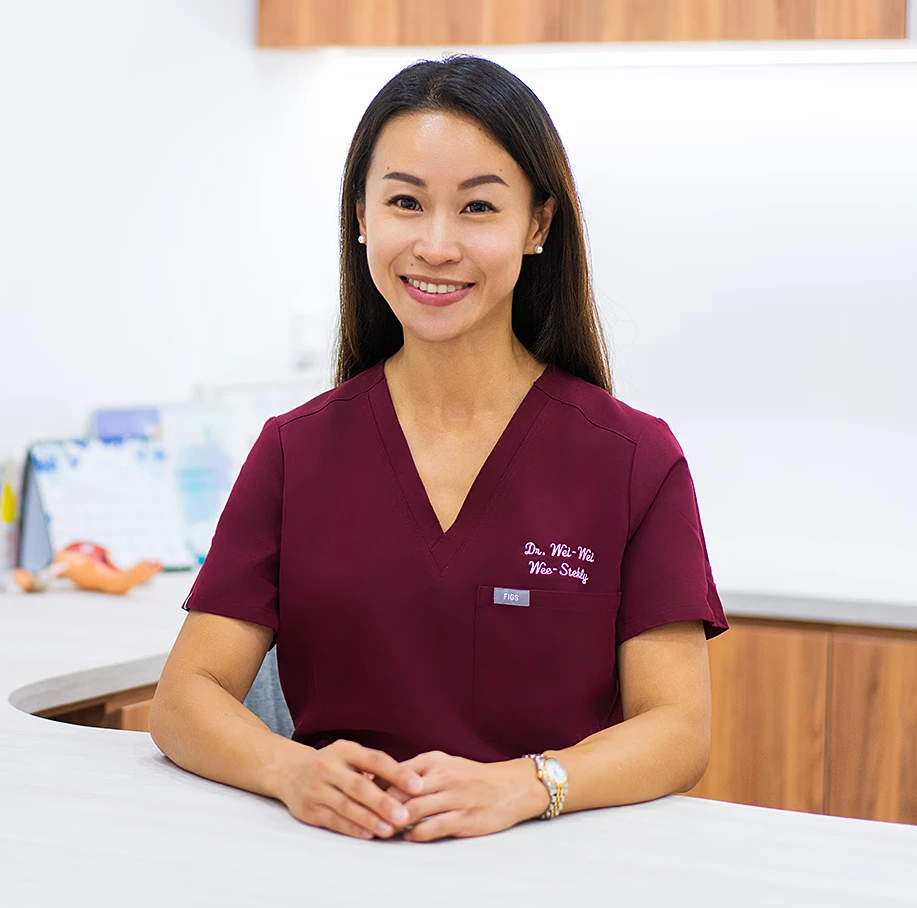
Dr. Wei-Wei Wee-Stekly is a senior consultant obstetrician and gynaecologist with extensive experience in women's health at every stage of life. She earned her Bachelor of Medicine and Bachelor of Surgery from Guy's, King's and St Thomas' School of Medicine at King's College London in 2003. Dr. Wee-Stekly went on to achieve her MRCOG in the United Kingdom and a Master of Medicine in Obstetrics and Gynaecology in Singapore. She is a Fellow of the Royal College of Obstetricians and Gynaecologists in the United Kingdom and a Fellow of the Academy of Medicine, Singapore.
Women’s health and well-being are our priority.
For more information or to make an appointment, please call (65) 6250 5608 or leave us a message below.
Operating Hours:
Saturday: 08:30am – 12:30pm
Sunday and Public Holiday: Closed